
Blogs
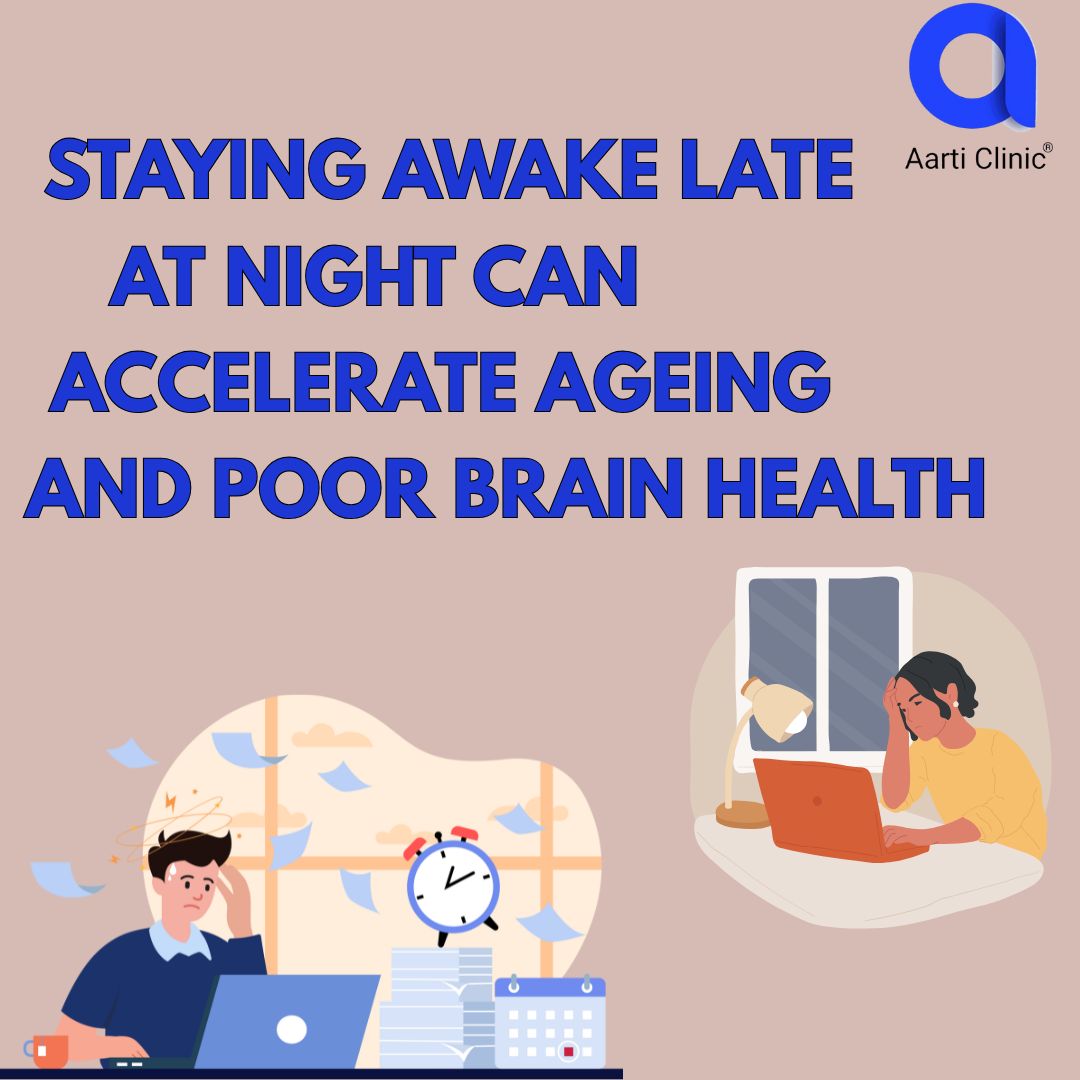
Late Nights and the Silent Speeding of Aging: What Your Brain Wishes You Knew 🌙
In the hustle to meet deadlines, balance personal goals, and squeeze more into a 24-hour day, many of us steal hours from one place: our sleep.
As a healthcare professional, I’ve often heard people say, “I’m a night owl,” or “I’ll sleep when I’m done.” But here’s the science-backed truth we can’t afford to ignore: Chronic late nights may be fast-tracking our aging and sabotaging our brain health.
Let’s break it down:
🔬 What Happens When You Stay Awake Late Regularly?
When you consistently delay sleep or reduce your sleep window:
- Melatonin Disruption: Melatonin, our natural sleep hormone, is released in response to darkness. Staying up late under artificial lights suppresses it—disturbing not just sleep, but your entire circadian rhythm.
- Brain Waste Clearance is Blocked: During deep sleep, the glymphatic system (the brain’s cleaning crew) gets to work. It flushes out toxins, including beta-amyloid—yes, the same protein linked to Alzheimer’s disease. Skimping on sleep = skipping brain housekeeping.
- Telomere Shortening: Late-night wakefulness contributes to oxidative stress and inflammation, both of which are linked to shorter telomeres—a biological marker of aging.
- Increased Cortisol, Reduced Growth Hormone: Your body produces less growth hormone (needed for cell repair) and more cortisol (the stress hormone) when you don’t sleep on time—accelerating cellular aging and mental fatigue.
🧓🏼 Visible Signs? And Invisible Damage.
You may notice dull skin, fine lines, or brain fog.
But beneath the surface, poor-quality sleep or sleeping late can set the stage for neurodegenerative diseases, metabolic disorders, and emotional instability.
Our brain is a high-performance organ—it needs the recovery window sleep provides. Without it, you may be functioning, but not flourishing.
🛌 So What Can You Do?
If you’re serious about staying sharp, youthful, and high-performing:
⏰ Establish a Sleep Routine: Aim to sleep and wake at the same time—even on weekends.
💡 Dim Lights Post-Dinner: Help your body sync to its natural rhythm.
🧘🏻♀️ Wind Down Ritual: Meditation, gentle stretches, or reading can help signal your brain that it’s time to rest.
🍵 Avoid Late Night Caffeine or Alcohol: These delay deep, restorative sleep.
👁️ Final Thought:
In our pursuit of success, health often becomes collateral damage. But brain health is the currency of long-term performance, and sleep is its greatest ally.
So the next time you think about burning the midnight oil, ask yourself: Is this task worth the toll it takes on my future self?
Remember: Youthful energy and clarity aren’t built in the gym or the boardroom—they’re built at night, in the dark, while you sleep.
Dr. Anand Hinduja
Dr. Anand Hinduja is a highly skilled and experienced family consultant with a special focus on diabetes and thyroid disorders