
Blogs
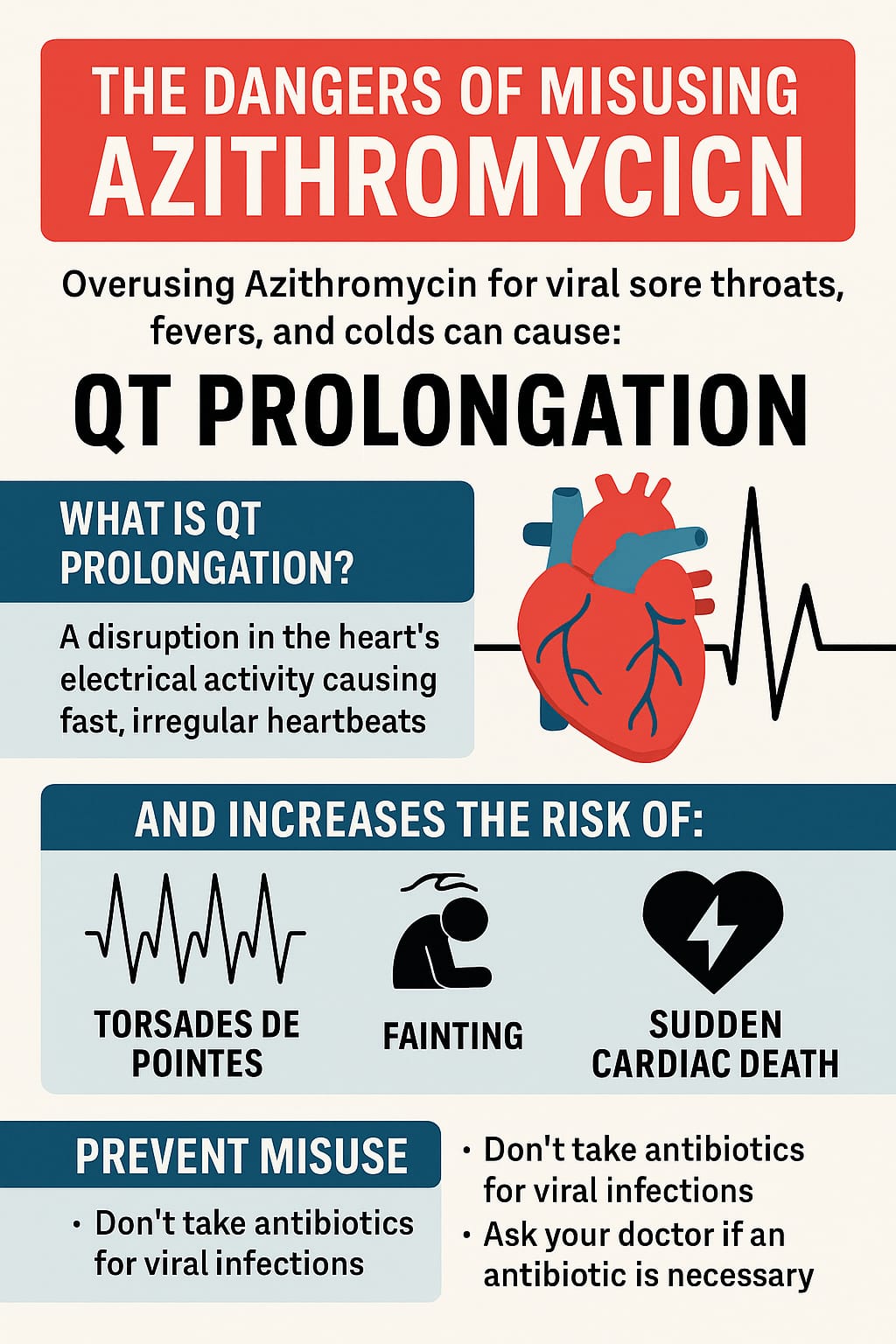
The Hidden Danger Behind That “Quick Antibiotic Fix”
“Doc, I’ve already taken Azithromycin — I get this sore throat every monsoon!”
Sound familiar?
In our country, antibiotics are often the first thing people reach for when they have a sore throat, fever, or cold — sometimes even without seeing a doctor. And among the most commonly self-prescribed or casually dispensed antibiotics is Azithromycin.
But here’s the truth that many don’t know:
Azithromycin, if taken unnecessarily or incorrectly, can affect your heart rhythm — and in rare cases, it can be fatal.
Most Sore Throats Are Viral — Not Bacterial!
Sore throat? Runny nose? Mild fever? In most cases, these symptoms are caused by viruses, especially during seasonal changes. Antibiotics don’t work against viruses. They are designed to kill bacteria — and using them when there’s no bacterial infection only causes more harm than good.
This overuse and misuse leads to two major problems:
1. Antibiotic resistance (bacteria becoming stronger and harder to treat)
2. Heart rhythm disturbances, particularly QT prolongation
What Is QT Prolongation?
Your heart has an electrical system that controls its rhythm — the timing of each heartbeat. QT prolongation is when part of the heart’s electrical cycle becomes abnormally long. Think of it like a delayed heartbeat. This may not sound serious at first — but it is.
A prolonged QT interval increases the risk of a dangerous condition called Torsades de Pointes, a type of life-threatening arrhythmia (irregular heartbeat). It can cause:
– Fainting or sudden collapse
– Seizure-like activity
– And in very rare cases, sudden cardiac death
What Makes Azithromycin Risky?
Azithromycin, when used unnecessarily or taken without proper supervision, can prolong the QT interval. Many people don’t know they are at risk — until it’s too late.
It’s especially dangerous when combined with:
– Other antibiotics like levofloxacin
– Anti-allergy medications
– Antidepressants
– Some anti-fungal or antacid drugs
So What Can You Do Instead?
Here’s a simple guide to keep yourself safe:
✅ Don’t self-medicate.
✅ Don’t pressure your doctor for antibiotics.
✅ Don’t buy Azithromycin over the counter.
✅ Know the red flags: If you feel dizzy, have palpitations, or faint while on medication, seek help immediately.
A Bigger Picture: Protecting Yourself AND the World
Every time antibiotics are misused, bacteria become more resistant, making it harder for future generations to treat even common infections.
And every time someone takes Azithromycin casually, they may be unwittingly putting their heart at risk.
So the next time someone says, “Just take Azithromycin, it’ll go away!” — stop and ask: “Do I really need it?”
In Summary
Azithromycin is not a harmless, everyday medicine. It is a powerful antibiotic meant for specific conditions — and it comes with real risks.
Use it wisely. Respect it. Protect your heart. And when in doubt, always ask a qualified healthcare provider.
Stay informed. Stay safe. Share this with someone who needs to hear it.
Dr. Anand Hinduja
Dr. Anand Hinduja is a highly skilled and experienced family consultant with a special focus on diabetes and thyroid disorders